Signs Your Deck Needs Repair
Most deck problems don’t announce themselves all at once. They show up gradually, a board that feels soft underfoot, a deck railing that moves when you grab it, a ledger connection that looks slightly off. By the time a problem is obvious, it has usually been developing for a while. Catching the warning signs early is what separates a manageable repair from a full replacement conversation.
Here is what to look for when you are assessing your deck's condition.
1. Soft or Spongy Boards Underfoot
This is one of the most common and most telling signs that something is wrong. When deck boards feel soft, spongy, or give slightly when you step on them, the wood underneath has absorbed moisture and begun to rot from the inside out.
Surface rot is not always visible from above. A board can look perfectly normal and still be compromised underneath. If you notice any give in the surface, probe the board with a screwdriver. If it sinks in without much resistance, the wood has rotted through and needs to be replaced before the problem spreads to the framing below.
2. Ledger Board Problems
The ledger board is the connection point between your deck and your house. It’s also where a lot of decks quietly fail without homeowners realizing it until the damage is significant.
Signs of ledger trouble include:
- Visible gaps between the ledger and the house framing.
- Rust stains running down the siding below the ledger connection.
- Flashing that has pulled away or is no longer seated correctly.
- Water staining on the interior wall directly behind the ledger location.
A compromised ledger is a structural issue, not a cosmetic one. If you see any of these signs, it needs professional assessment by a reputable
deck builder before the damage extends into the home's framing.
Get a Free Estimate
3. Wobbly or Loose Railings
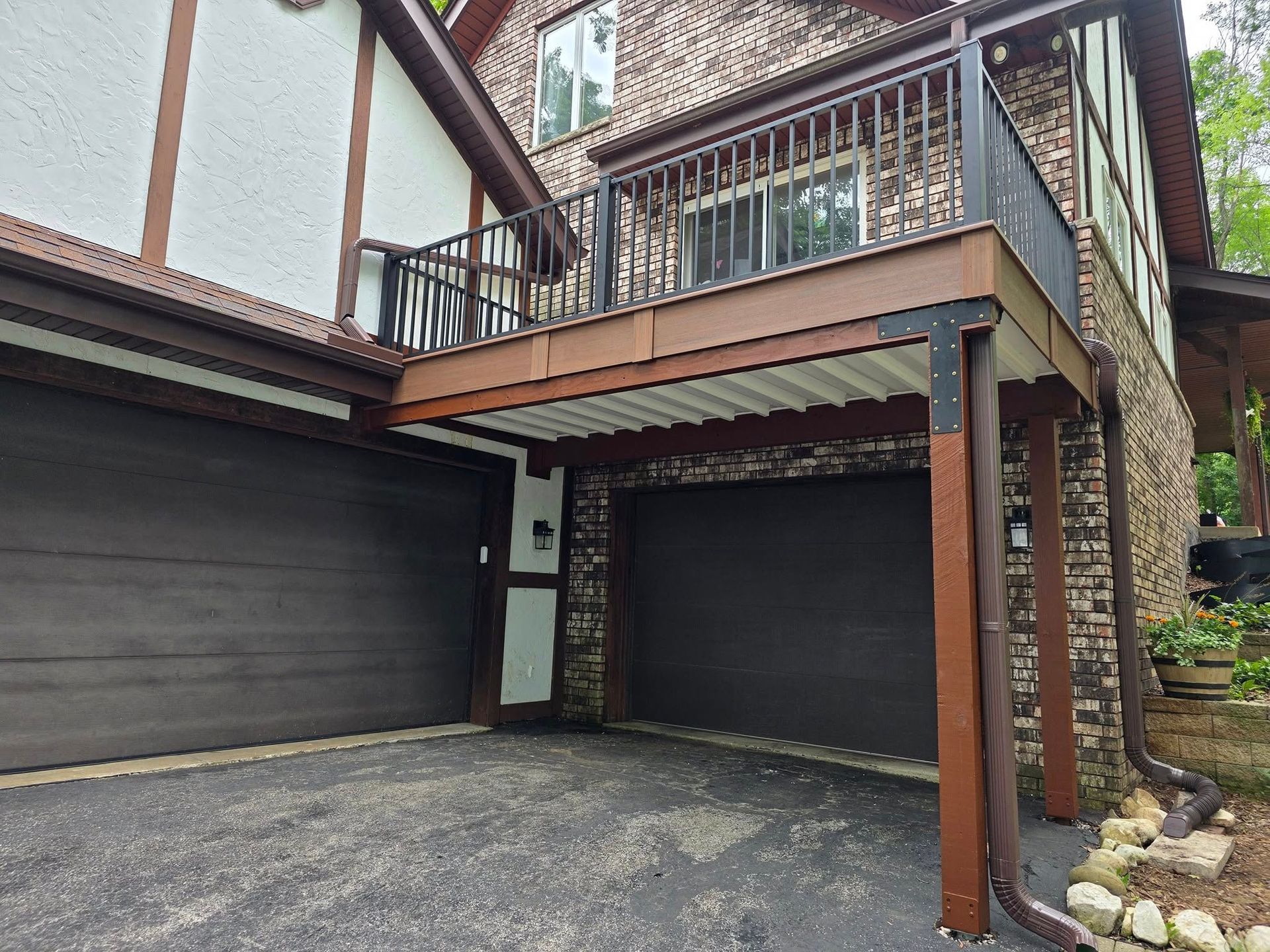
Grab your railing and push against it. It should feel completely solid. Any movement at all is a safety concern, and in Wisconsin where ice and winter conditions put additional stress on outdoor structures, loose railings can become dangerous quickly.
Railing issues usually come from one of three places:
- Post connections that have loosened over time as the framing lumber dried and moved.
- Hardware that has corroded and lost its holding strength.
- Structural damage at the base of a post from rot or moisture.
A railing that wobbles needs attention regardless of how minor the movement seems. Code requirements exist for a reason, and a railing that fails under load is a liability issue on top of a safety one.
4. Visible Rot at Posts and Beams
Deck posts and beams sit close to the ground or in contact with concrete footings, which makes them particularly vulnerable to moisture. Rot at the base of a post is easy to miss because it often starts below grade or just at the soil line where it’s not immediately visible.
Check your posts by probing the base with a screwdriver. Solid wood will resist the probe. Rotted wood will not. Beam rot is often visible as darkening, soft spots, or a change in surface texture along the underside of the beam where moisture collects.
5. Boards Pulling Away From Each Other or Cupping
Deck boards that have started to cup, curl at the edges, or pull away from each other are telling you that the framing underneath has moved. This almost always comes back to wet framing lumber that was not kiln dried before installation. As it dried in place after the deck was built, it shrank and pulled the boards with it.
Isolated cupping can sometimes be addressed by refastening boards. Widespread cupping across the whole deck usually points to a framing issue that needs more than surface-level attention.
6. Rusted or Corroded Hardware
Hardware is easy to overlook but important to check. Joist hangers, ledger bolts, and post bases that have corroded significantly have lost structural integrity even if they look like they are still in place. Corroded fasteners in the deck surface also allow moisture into the wood around them, accelerating rot.
Catching Deck Problems Before They Become Bigger Issues
A small deck repair handled early almost always costs less and causes less disruption than waiting until the problem has spread. If any of these signs look familiar on your deck, it’s worth getting a professional assessment before the next Wisconsin winter adds more stress to a structure that is already showing weakness.
Call us at (414) 453-1235 or stop by our showroom at 1900 S 74th St in West Allis to talk through what you’re seeing and what the right next step looks like for your specific deck.