Deck Railing Options: Style, Safety, and Code Requirements
Railings are one of those deck decisions that most homeowners underestimate until they’re standing in a showroom trying to choose between options they have never thought much about before. The railing system you choose affects how the whole deck looks, how safe it’s, how much maintenance it requires over time, and whether it meets the code requirements for your municipality.
Here is a practical guide to your main options and what to think about before making a decision.
What Wisconsin Code Requires
Before getting into style and material options, it helps to understand what the code requires so you know what you are working within.
In Wisconsin, deck railings are generally required when the deck surface is 30 inches or more above grade.
The specific requirements that apply to most residential decks include:
- Minimum railing height of 36 inches for decks less than 6 feet above grade.
- Minimum railing height of 42 inches for decks 6 feet or more above grade.
- Balusters spaced no more than 4 inches apart so a 4-inch sphere cannot pass through.
- Top rail that can support a 200-pound concentrated load.
- Post connections that meet specific structural requirements based on post spacing.
Your local municipality may have additional requirements on top of the state baseline, and a building permit is typically required when railings are part of a new
deck installation. A contractor who handles permits as part of the job, rather than asking you to figure it out yourself, will make sure your railing system meets every applicable requirement before the inspector shows up.
Get a Free Estimate
Aluminum Railings
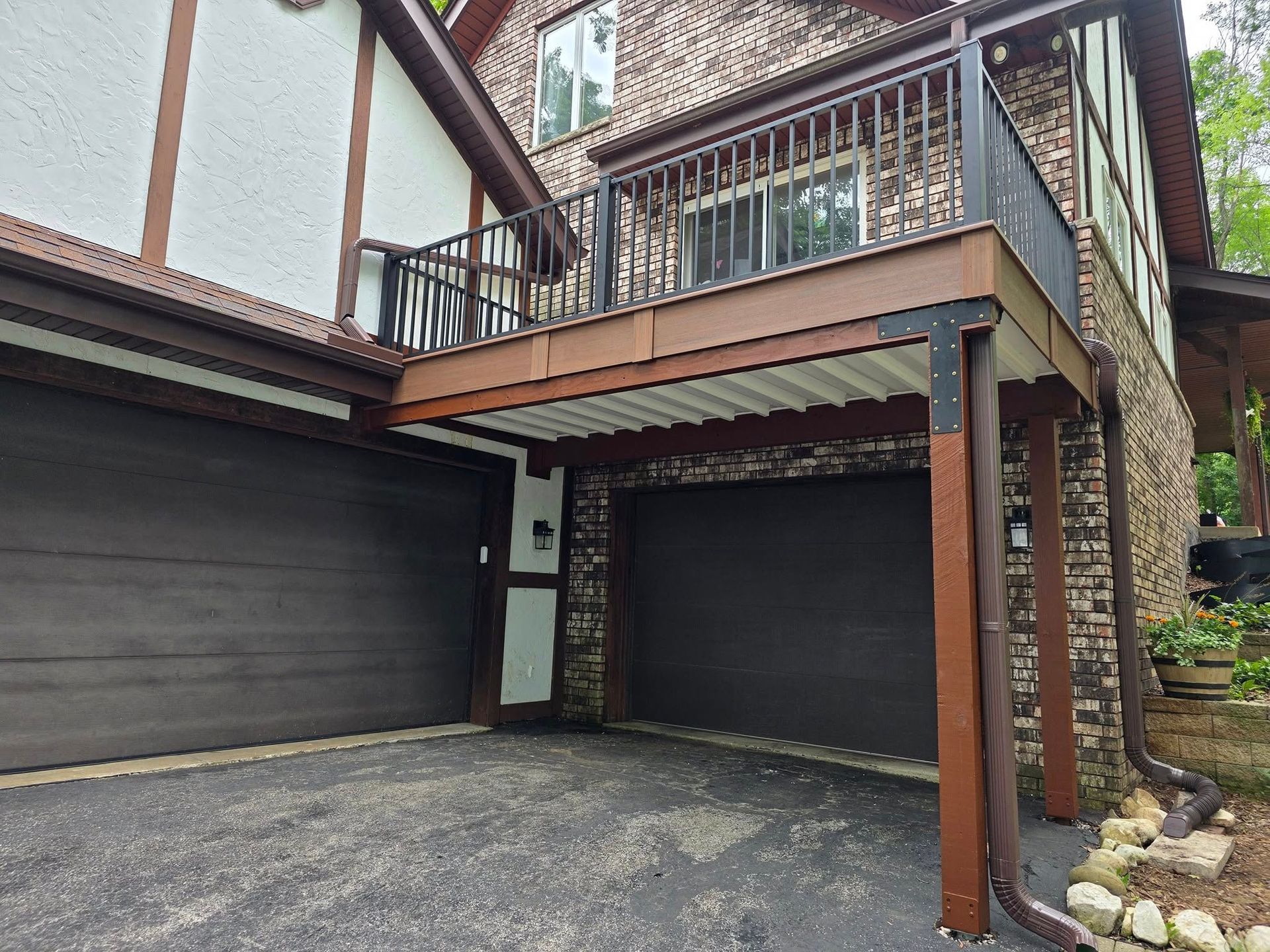
Aluminum is the most popular railing material for composite and PVC decks across southeastern Wisconsin, and the reasons are practical as much as aesthetic.
Aluminum doesn’t rust, does not need painting, and does not corrode under Wisconsin's weather cycles. It holds its appearance year after year with no treatment required beyond an occasional rinse. Westbury aluminum railings, which we use on our projects, come in multiple colors and profiles so they can be matched to almost any home exterior without looking like a generic afterthought.
Aluminum works especially well on decks that face a lot of weather exposure because there is simply nothing to maintain. It also pairs well with composite decking because the two materials share a similar low-maintenance profile over the life of the deck.
Steel Railings
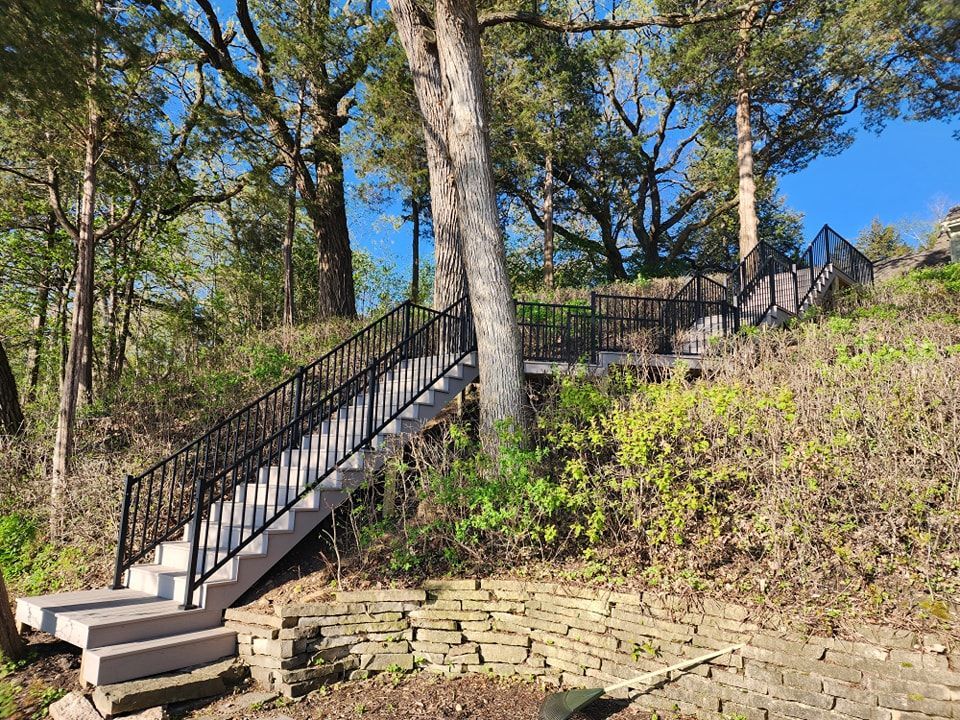
Steel railing systems offer more structural mass than aluminum and a different aesthetic. Fortress steel railings, for example, come in a range of styles from contemporary cable and glass combinations to more traditional baluster profiles, all with powder-coated finishes that are engineered to resist fading and weathering under real outdoor conditions.
Steel is a strong choice for larger decks, elevated decks where structural load requirements are more demanding, and homeowners who want a more substantial look than aluminum provides. The powder-coated finish on a quality steel system holds up well in Wisconsin's climate and does not require the ongoing treatment that bare or painted steel would.
Custom Fabricated Steel Railings
For homeowners who want something that is genuinely one of a kind, custom fabricated steel railings open up a completely different category of possibility. Dan at Brew City Builders hand-fabricates custom steel railings designed specifically for each project.
Custom options we have built for past projects include:
- Family crests incorporated into railing panels.
- Geometric patterns that complement contemporary home styles.
- Decorative screens that add privacy without fully enclosing the deck.
- Nature-inspired designs specific to the homeowner's vision.
A custom fabricated railing turns a deck into something that is distinctly yours rather than a configuration pulled from a catalog. It’s the detail that makes a finished deck look like a considered design decision rather than a standard installation.
Glass and Cable Railings
Glass panel and cable railing systems are worth mentioning for homeowners who want to preserve sightlines from the deck. If you have a view worth protecting, whether it is a backyard landscape, a water feature, or just an open yard that feels more expansive without visual barriers, glass and cable systems keep the deck open while still meeting code requirements.
The trade-off is cost and maintenance. Glass panels require more cleaning than other railing materials, and cable systems need periodic tensioning to maintain their appearance and structural integrity.
Choosing the Right Railing for Your Deck
The right railing system comes down to four things. The style of your home, how much maintenance you want to do, your budget, and what the code requires for your specific deck height and location.
Seeing railing options in person makes a significant difference. Stop by our showroom at 1900 S 74th St in West Allis any weekday to
compare materials side by side, or call us at (414) 453-1235 to talk through which system makes the most sense for your project.