
7 Best Deck Materials That Can Handle Wisconsin Weather
Wisconsin is not forgiving when it comes to outdoor materials. Heavy snow, hard freezes, spring freeze-thaw cycles, humid summers, and months of UV exposure make up a climate that exposes every weakness in a deck material fast. Some options that work fine in milder parts of the country fall apart here within a few years.
If you are planning a
deck installation in Wisconsin, here are the seven materials worth considering, and what each one actually offers in this climate.
1. Pressure-Treated Pine
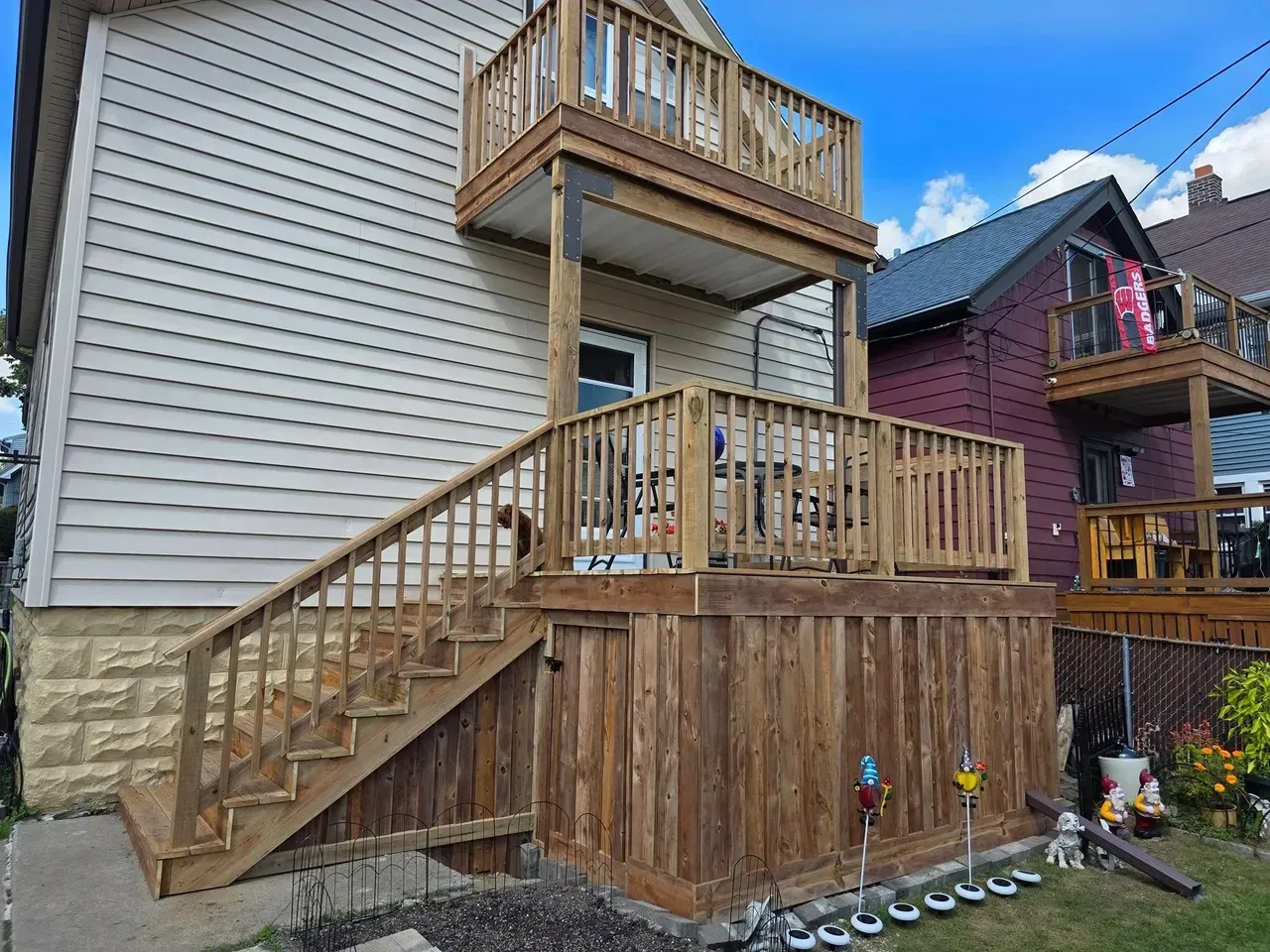
Pressure-treated pine is where most Wisconsin deck conversations start. It is the most affordable option, widely available, and familiar to nearly every contractor in the area.
What you need to know:
- Typical lifespan in Wisconsin is about 10 to 15 years with consistent maintenance
- Needs staining or sealing every two to three years to resist rot and warping through snow, ice, and humidity
- Most affordable upfront cost of any deck material
- Most vulnerable to freeze-thaw damage when maintenance falls behind
It is a workable starting point, but it demands real commitment to upkeep in this climate to hit its full lifespan.
Get a Free Estimate
2. Cedar
Cedar is the natural upgrade from treated pine. Its built-in oils give it better inherent resistance to rot and moisture, and it ages more gracefully than treated pine when finish maintenance is not perfectly consistent.
What you need to know:
- Typical lifespan in Wisconsin is mid-teens to around 15 to 20 years with proper care
- Still needs staining or sealing every two to three years for full protection
- More attractive natural appearance than treated pine, weathers to a pleasant grey if left unfinished
- Costs more than treated pine but less than composite systems
If natural wood is non-negotiable for you, cedar is the stronger choice over treated pine.
3. Composite Decking (Wood-Plastic Blend)
Standard composite decking combines wood fibers and plastic into a material that outperforms natural wood in durability and maintenance requirements. It is one of the most popular choices for Wisconsin homeowners who want to cut down on upkeep without going to a full PVC product.
What you need to know:
- Commonly quoted lifespan of 25 to 30 years or more
- Resists rot, mold, and insects and handles freeze-thaw cycles better than wood
- Needs only basic soap and water cleaning, no staining or sealing
- More expensive upfront than wood but maintenance savings add up over time
Look for capped composite products with a protective outer shell for better moisture performance in Wisconsin conditions.
4. PVC and Capped Polymer Decking
PVC and fully capped polymer decking is the premium tier. These products contain no wood fibers at all, giving them the strongest moisture resistance and the longest rated lifespan of any mainstream decking material.
What you need to know:
- Rated at 30 years or more in Wisconsin, with some products backed by 50-year warranties
- Very low moisture absorption and strong UV resistance make it the top performer in Wisconsin's climate
- Handles snow, ice, and freeze-thaw cycling better than any wood-based option
- Highest upfront cost, typically $130 to $150 per square foot installed including framing and finishes
If you want the lowest possible maintenance and the longest lifespan, this is the top tier choice for Wisconsin.
5. High-Density Hardwoods
Species like ipe, thermally modified wood, and black locust are not as common in Wisconsin but worth knowing about. Their natural density and rot resistance allow them to handle months of snow cover and repeated freeze-thaw cycles better than commodity softwoods.
What you need to know:
- Marketed as significantly outlasting standard softwoods when properly installed
- Benefits from surface maintenance to preserve color, though structural integrity holds up well without it
- More expensive and harder to source than pine or cedar
- A premium option for homeowners who want natural wood performance at a higher level
6. Aluminum Decking
Aluminum decking is not common on residential projects but deserves a mention for what it offers. Its non-porous surface avoids rot and insect damage entirely and holds up under snow and ice loads with essentially zero maintenance.
What you need to know:
- No rot, no mold, no insect damage under any conditions
- Handles heavy snow loads and freeze-thaw cycles without structural degradation
- More modern aesthetic that does not suit every home style
- Higher cost and less widely available than composite or wood
- Often used where maximum durability and fire resistance are the priority
7. Hybrid Builds: Composite Surface With Wood Framing
The most common deck structure across Wisconsin is actually a hybrid. Composite or PVC deck boards on the surface with pressure-treated lumber framing underneath. This approach puts the durable, low-maintenance material where it matters most while keeping overall project costs more manageable.
What you need to know:
- Surface boards rated for 25 to 30 years or more while standard treated wood framing has a 10 to 15 year lifespan
- Upgrading to KDAT framing lumber, which is kiln dried after treatment and already dimensionally stable at installation, significantly improves frame performance and reduces warping and twisting over time
- Most practical balance of cost and durability for Wisconsin homeowners
- The most widely used construction approach across southeastern Wisconsin
The Best Material Depends on Your Priorities
The right material depends on your budget, your maintenance tolerance, and how long you plan to stay in your home.
If low maintenance and long lifespan are the priority, PVC or capped composite is the strongest choice for Wisconsin's climate. If natural wood matters to you, cedar with a consistent maintenance schedule is the better softwood option. And if budget is driving the decision right now, pressure-treated pine with a real commitment to upkeep every two to three years is a workable starting point.
Whatever surface material you choose, pay attention to what goes underneath. The framing is what holds the whole structure together, and the quality of those materials determines how your deck performs over the long haul.