What Restaurants and Bars Should Know Before Building a Commercial Deck
An outdoor deck can add significant revenue for a restaurant or bar. More seating means more covers, and a well-designed outdoor space gives you something to market that draws people in on its own. But a
commercial deck isn't built the same way a residential one is, and the decisions you make upfront affect how long it lasts, how much it costs to maintain, and whether it passes inspection the first time or becomes a back-and-forth with the municipality.
Commercial Builds Have Different Code Requirements
Residential and commercial decks are held to different standards, and commercial requirements are more demanding across the board.
A few areas where this shows up:
- Load ratings. Commercial decks have to be engineered for higher live loads than residential decks. That accounts for the weight of furniture, equipment, and a full crowd of people in a concentrated space.
- Railing height and spacing. Commercial railing requirements are stricter than residential ones. The height minimums are higher, and the spacing between balusters is tighter.
- ADA compliance. If your deck is open to the public, it needs to meet ADA accessibility requirements. That means proper ramp grades, landing dimensions, and clear path widths throughout the space.
- Egress. Local codes will dictate how many exits the space needs and where they can be located. This has to be designed in from the start, not added after the fact.
Permitting a commercial deck takes longer than a residential one and involves more review. Working with a
deck contractor who has done commercial builds before means fewer surprises in that process.
Get a Free Estimate
The Surface Takes a Beating
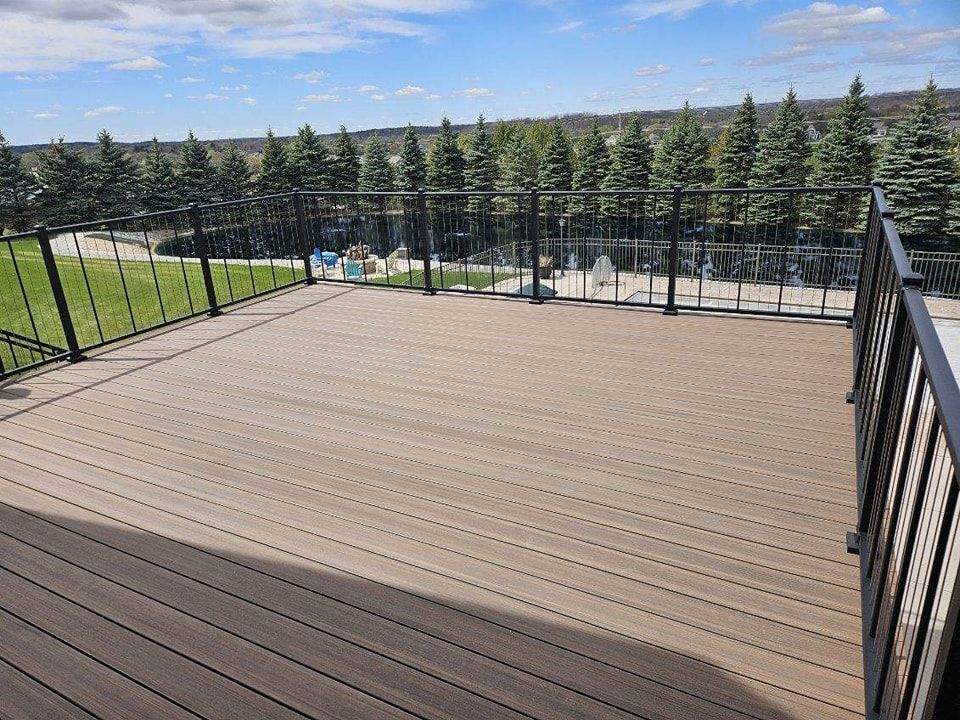
A restaurant or bar deck sees foot traffic, spilled drinks, dragged furniture, and grease from outdoor cooking equipment every day it's open. The surface material has to hold up to all of that without becoming a maintenance problem or a liability.
Timbertech Advanced PVC composite decking handles commercial use well for a few reasons:
- It doesn't absorb liquid, so spills clean up easily and moisture doesn't work into the boards.
- It won't splinter, which matters on a surface where people are walking barefoot or in open shoes.
- It holds up through Wisconsin winters without cracking or shifting through freeze-thaw cycles.
- It needs no annual sealing, sanding, or refinishing, which is a real operational advantage when you're running a business.
Wood decking on a commercial property means committing to a maintenance schedule that most operators end up falling behind on. Once that starts, the surface deteriorates faster than it would have otherwise.
Think Through the Layout Before Anything Gets Built
The layout of a commercial deck affects how the space functions for both staff and customers, and changes after construction are expensive.
A few things worth working out in the design phase:
- Table spacing. ADA clear path requirements and practical server access both require more space between tables than most people plan for initially.
- Service access. Where are servers coming in and out? Is there a service station on the deck or are staff running back through the building for everything? The answer affects traffic flow and how efficiently the space operates.
- Bar or grill placement. If you're putting an outdoor bar or cooking equipment on the deck, the framing underneath needs to be built for that weight and the decking around it needs to handle heat and grease exposure.
- Sun and shade. A south-facing deck with no overhead cover empties out in the afternoon in July. A pergola or shade structure over part of the space extends the usable hours significantly.

Plan for Winter Storage or Year-Round Use
Wisconsin's outdoor dining season is roughly May through October on a good year. What happens to the deck in the off-season is worth thinking through during the design phase.
If you're pulling furniture and leaving the deck empty, drainage and surface durability matter more because standing water and ice will be on that surface for months. If you're covering the deck with a temporary enclosure for shoulder-season use, the structure needs to be built to support whatever anchoring system you're using.
Some operators invest in a more permanent covered structure that extends the season further. That's a bigger upfront cost but it changes the revenue math on the space over a full year.
Start With the Right Plan
A commercial deck is a long-term investment in your business, and most of what determines whether it pays off is decided before construction starts. Code compliance, surface material, layout, off-season planning, and a structure built to carry real commercial loads. Getting those right upfront saves you from costly fixes later.
If you’re planning an outdoor deck for your restaurant or bar in the Milwaukee area, call Brew City Builders at (414) 453-1235 or stop by our West Allis showroom any weekday to talk through the project.