Deck Repair vs Full Replacement: How to Decide
Most deck problems don't announce themselves with a dramatic collapse. They creep in slowly. A board that flexes a little too much underfoot. A railing that wobbles when you grab it. A section near the ledger that's starting to look darker than the rest. By the time homeowners start asking whether to repair or replace, the deck has usually been sending signals for a while.
Start With the Framing
Surface boards are the obvious thing to look at, but the framing underneath is what actually determines whether repair makes sense.
A deck with a solid frame and surface-level damage is a strong repair candidate. Rotted boards, worn finishes, and even outdated railings can all be addressed without touching the structure underneath. But if the joists are soft, the ledger connection is compromised, or the posts are showing rot at the base, you're looking at a structural rebuild regardless of how the surface looks.
Before deciding anything, check:
- Ledger board condition where the deck meets the house.
- Post bases for rot or moisture damage at ground level.
- Joists and beams for soft spots, sagging, or pest damage.
- Any visible structural movement or settling.
If the frame is sound, repair is usually worth exploring. If it isn't, replacement almost always makes more financial sense than patching a compromised structure.
Get a Free Estimate
The 50 Percent Rule
A rough guideline that a typical deck company will use: if the cost of repairs exceeds 50% of what a full replacement would cost, replace it. You're spending close to replacement money without getting a replacement result, and the underlying issues often surface again within a few years anyway.
This calculation changes if the existing deck has a shorter lifespan than a new build would. An older
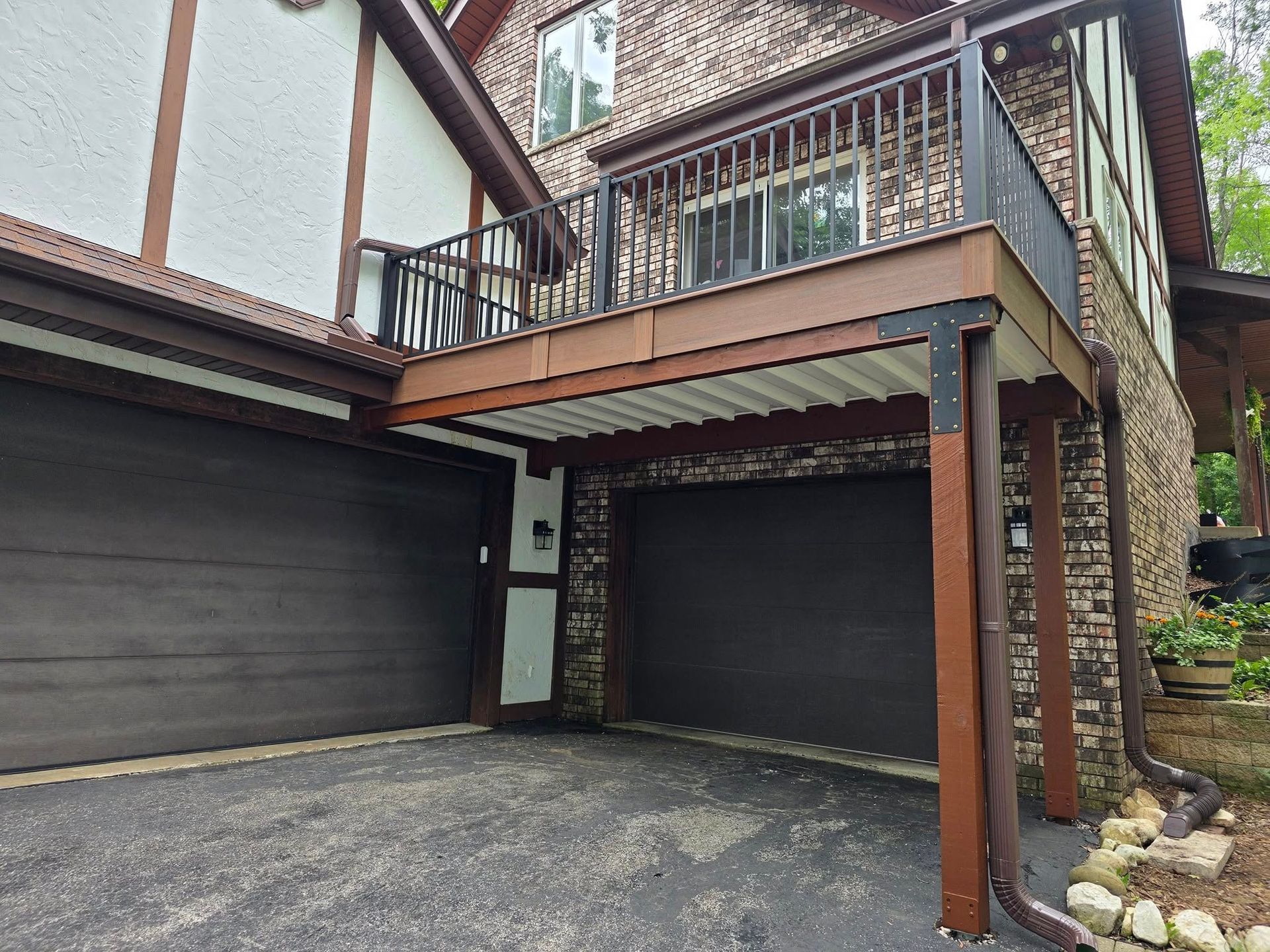
pressure-treated deck that's already 15 years in has limited runway left even after repairs. A new deck built with KDAT framing and Timbertech Advanced PVC composite decking is going to perform for 30 to 40 years with minimal upkeep. The long-term math usually favors replacement at that point.
When Repair Is the Right Call
Repair makes sense when:
- The structural framing is solid and the issues are limited to the surface
- The deck is relatively new and the problem is isolated
- The damage is cosmetic, worn boards, faded finish, outdated railing system
- Budget is tight and the structure has real life left in it
Making the Right Call for Your Deck
Repair and replacement both have their place. The mistake most homeowners make is deciding based on what they can see from the surface rather than what's actually going on underneath. Getting a professional assessment before committing to either direction saves money and avoids fixing the wrong thing.
If your Wisconsin deck is showing signs of wear and you're not sure which direction makes sense, call
Brew City Builders at (414) 453-1235 or stop by our West Allis showroom any weekday to talk it through.